Showing posts with label U.K.. Show all posts

Tuesday, September 13, 2011

31. apb: Something To Believe In

Vinyl...if you were old enough to collect music prior to the 1990s you bought it. Many own a box or two of records somewhere...the attic maybe? Perhaps it was in the basement and got soaked thanks to Hurricane Irene just a few weeks ago. Either way, you've loved those records through the years (well, maybe not that Hall and Oates you got when you were eleven). I frequently pull my old records off the shelf and place them on the shiny silver Crosley turntable my wife gave to me one Christmas. I'm a living room dancer (usually right in front of the window), but it's gotta be loud. Inevitably, Chelo gives me the "Marc, turn that down!" (which totally contradicts the meaning of the gift, yes?) And, anyway, it was fun while it lasted. My point is, we loved those records and throughout the years we've probably done the best we could to find good deals to slowly acquire the CD versions of the recordings (thank you Amazon). Thus, we come to APB.

One of my favorites to groove to is APB's Something To Believe In (at least that's what the neighbors say). APB was/is a Scottish band formed in 1979. Something To Believe In (1985) is a wonderful collection of singles that toe the line between the post-punk and dance genres, but remains all alternative. Iain Slater's funky pre-Flea bass carries the music from decade to decade with powerful grace, while the guitars are sharp, siren-like at times (sounds of the day...heard in bands like Haircut 100 as well as modern artists like Bloc Party). The drums are tinny and heavy on the high-hat, setting the tone for the stampede to the dancefloor.

APB was a popular underground band in the NYC area...very underground. After their small record label went out of business, fans in search of Something To Believe In were met with the letters OOP..."Out Of Print". I know this because I was searching the internet for a CD/digital version of the record I'd enjoyed for years. Naturally, my search led me to Amazon whereupon I couldn't help but be astonished at the prices people were paying for the original record...up to $300 (even the 1996 reissue was selling for three digits). My first thought had me wondering just how much I wanted to keep that record, but I shook it off and realized it was a testament to how good the album is. Besides, it wasn't long after that a stateside indie record label re-released Something To Believe In as a 2-CD set with rarities and live tracks...and that's why I can tell you about it today...yay Young American Recordings!

I'm listening to it as I'm typing, and I swear I can't sit still.

The first song, "Shoot You Down" was a staple of The Ferry Club in the 1980s, and remains one of my favorite songs of all time. It's followed by bees-knees funk...one after another as, again, this is a collection of singles from the early to mid 80s...not a studio album with clunkers buried between hits. All of these songs saw the inside of a club in their time. "Talk To Me", "Palace Filled With Love", "Rainy Day", "One Day", and "What Kind Of Girl?" are the other standouts, but every song makes you move. Every track is incredibly catchy.

I say you should listen to every album I've written about, but I also know that some of the albums are widely popular and my readers have already formed opinions about them. This is not widely popular, so if you have not heard it, I urge you to listen...and you'll see what all the OOP fuss was about. Here's the original recording of "Shoot You Down" playing over current video of APB followed by a performance of "Palace Filled With Love" from NYC less than a month ago. Now go find Something To Believe In.



Tuesday, August 23, 2011

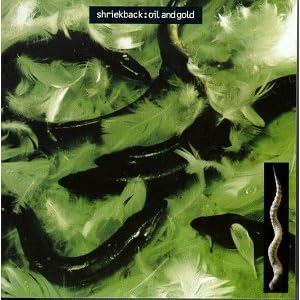
28. Shriekback: Oil And Gold

I've said before that the musical heyday for my ears was 1985/1986. You've already read about The Cure's The Head On The Door, The Smiths' The Queen Is Dead, and The Cult's Love...and there are many more reviews to come, as it was during this time when lesser-known underground bands began gracing mainstream ears. Today, I highlight an obscure and very underrated album from 1985 that finally gets a facelift this week...in the form of a remastered 2CD edition including B-sides and live tracks. It's one of my absolute favorites...Oil And Gold by the band Shriekback.

In 1981, former XTC keyboardist Barry Andrews and former Gang Of Four bassist Dave Allen joined guitarist/vocalist Carl Marsh to create Shriekback. After 3 years of marginal dance chart success and label hopping Shriekback made Martyn Barker an official band member (he had signed on as drummer to help with the previous recording) and recruited the ubiquitous ex-Damned guitarist Lu Edmonds...thereby adding muscle to the somewhat tinny dance sounds of the previous albums Care (1983) and Jam Science (1984). The result is an eclectic mix of jungle-thumping dance music (slinking into punk rock when Lu Edmonds is involved). That's the overall feel of the album, however, the band weaves four beautifully sinister pillow-soft ballads into the fabric. The album succeeds despite the fact that Carl Marsh left the band midway through the recording (Barry Andrews took over the vocal duties). It flows smoothly from track one to track ten.

Oil And Gold opens with the 1-2-3 punch of "Malaria", "Everything That Rises Must Converge" (borrowing the title from the short story by Flannery O'Connor), and "Fish Below The Ice" (all sung by Marsh). These are followed by two of the slower songs "This Big Hush" and "Faded Flowers" (Incidentally, director Michael Mann was a Shriekback fan, and used "This Big Hush" is his 1986 thriller Manhunter...the first to feature the serial killer Hannibal Lecter. He also used "Faded Flowers" in Band Of The Hand). Both (sung by Andrews) are tremendous songs nestled in perfectly amongst the higher octane tracks.

Then comes "Nemesis", Shriekback's most well-known song. Based upon the Nemesis hypothesis first proposed in 1984, it states that a hypothetical dwarf star is out there orbiting the sun and that it gets a little too close every 26 million years causing mass extinctions. "Nemesis", the song, sounds like our party theme the night before it all hits the fan. It's big and brash, and it sounds like nothing Shriekback had done before. It's a great song that showcases the intelligence of Shriekback's lyrics as well. Name another band that rhymes "parthenogenesis" successfully in a recurring chorus.

Shriekback are still around producing wonderful music (welcome back Carl Marsh). And again, this week...today, in fact...the 2CD edition of Oil And Gold is released giving this great 1985 album the extra attention it deserves. The original disc is remastered and a second CD contains B-sides and live tracks. Here is the video for "Nemesis". It's safe to say we won't be around for the next cycle of mass extinction (at least according to the Nemesis hypothesis), but if I get word that something major is going down, this song will be on my turntable.


Tuesday, June 28, 2011

24. The Smiths: The Queen Is Dead


Quite simply, 1986's The Queen Is Dead is the finest album from one of the most influential British bands of the 80s, The Smiths. It provides us with the best of Morrissey's wry wit, morbid sense of humor, and scathing contempt of popular British culture. Couple Morrissey's lyrical prowess with guitarist Johnny Marr's ability to consistently write perfectly killer pop songs and you have one of the most incredible albums of its time.

Opening with a slight introduction (World War I song "Take Me Back To Dear Old Blighty") and then BAM! An all-out assault by drummer Mike Joyce. His rolling beat is reminiscent of The Cure's Lol Tolhurst on "The Hanging Garden" from 1982...the relentless pounding without pause similar to The Damned's Rat Scabies (on 1989's "Anything"). Can you imagine an American band attempting to release an aggressive, driving song titled "The President Is Dead"? The Smiths were open in their arrogance and and were not shy with words.

As the title track concludes like a tornado's sudden halt, it gives way to the contrasting, somewhat silly sounds of "Frankly, Mr. Shankly". From there, the album matures...the two songs I liked the least upon its original release in 1986 were "I Know It's Over" and "Never Had No One Ever". I was into upbeat, aggressive alternative pop songs at the time ("Inbetween Days", "She Sells Sanctuary", "World Destruction"...). Musically, I had not matured enough to appreciate these two...brilliant songs that they are. Covered respectively by two of my favorites, Jeff Buckley and Billy Bragg, they are now near the top of my list. 

The catchiness of "Cemetry Gates [sic]" is undeniable and is meant as a message from Morrissey to his detractors who cried foul at his use of texts written by some of his favorite authors. "Bigmouth Strikes Again" showcases the morbid sense of humor of our protagonist..."Sweetness, I was only joking when I said I'd like to smash every tooth in your head/Sweetness, I was only joking when I said, by rights, you should be bludgeoned in your bed." It was the first single from the album and is as aggressive as the title track...a level unmatched by any Smiths song heretofore, making The Queen Is Dead the hardest rocking Smiths album.

Lost in the overall magnificence of the album is "The Boy With The Thorn In His Side", a Johnny Marr creation which Morrissey has stated is his favorite Smiths song. "There Is A Light That Never Goes Out" is another example of how Morrissey can make you smile while pondering the romanticism of being killed by a double-decker bus together. And "Some Girls Are Bigger Than Others"...easily recognizable, heavenly Smiths melody under lyrics that close the album exactly how you might predict...with Morrissey's biting humor. "From the ice age to the dole-age there is but one concern/I have just discovered/Some girls are bigger than others...some girls' mothers are bigger than other girls' mothers". It has an interesting introduction as well. It starts, fades away, then returns...as if a door is opened, closed on your face, then opened again with a "just kidding!"

A tremendous album, The Queen Is Dead is for anyone...Smiths aficionado or not (it's a great intro to the best music of the 1980s). The first video shows The Smiths live on the Old Grey Whistle Test in May of 1986 (just a month before the album's release...making June, 2011 the 25th anniversary of The Queen Is Dead) performing "Bigmouth Strikes Again" and "Vicar In A Tutu" (apologies for the choppy intro to "Vicar").  The second is a live performance just two months later at Salford University showing just how close to punk The Smiths were in attitude. 


Sunday, June 12, 2011

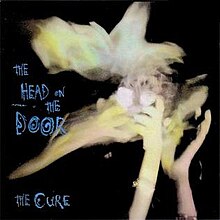
21. The Cure: The Head On The Door


The Cure have taken their fans on a thirty year roller coaster ride. They've been at it since the mid-70s and have gone through numerous transitions...both lineup changes and musical output. Robert Smith and company have delivered a host of labeled music over the years: post-punk...gothic rock...new wave. I've had a lot of favorite bands in my time, but, for me, the 80s begins and ends with The Cure. This post highlights their 1985 album The Head On The Door.

In 1985, I began helping my brother, Jeff, at his nightclub called The Ferry Club in Staten Island, New York and everything fell into place for me musically. I'm not sure how much work Jeff got out of me in bewteen my runs to the DJ booth. I would literally drop what I was doing to go ask my musical guru, DJ Mark the Spark, what that song was and who this band is. Two important songs from that year helped alter my musical tastes forever...The Cure's "Inbetween Days" and "Close To Me".  

The Head On The Door is the sixth Cure album. It marked the return of bassist Simon Gallup to the band and was the first for drummer Boris Williams. Guitarist/keyboardist Porl Thompson also joined Robert Smith and keyboardist Lol Tolhurst as an official member of the band at this time as well. The Head On The Door follows a goth-gloomy group of releases from The Cure that are all absolutely wonderful: Seventeen Seconds (1980), Faith (1981), Pornography (1982), and The Top (1984). For THOTD, The Cure learned how to mesh the gloom and doom of the previous albums with a more radio friendly sound which increased their commercial success and fan base tremendously. 

The album opens with a quick drum-intro by Boris Williams, then barrels into the familiar, cheery guitar to create the perfect pop melody that is "Inbetween Days". It is a smile-inducing song through and through...in any company, at any time of day. It is also the perfect example of this gloom and doom meets "C'mon, Get Happy!" juxtaposition. Consider the lyrics to "Inbetween Days"..."Yesterday I got so old I felt like I could die/Yesterday I got so old it made me want to cry"...not quite happy times for Robert Smith. However, in spite of the melancholy, it remains one of the catchiest, most danceable Cure songs to this day.

"Inbetween Days" is followed by a few experiments. "Kyoto Song" has a far east quality to it, while "The Blood" employs a Spanish-flamenco sound. One of my favorite Cure songs, "Six Different Ways", has many layers of instrumentation giving it a light, airy, childlike sound. Side one closes with the epic "Push". It's "Push" that is the gateway to the continuing sounds of the band. With about two minutes of classic Cure sounding guitars before Robert Smith chimes in, you might recognize this as a track on any album hereafter.

The highlight of side two is "Close To Me". Prominently featuring xylophone-like keyboards and some garish hand clapping, "Close To Me" seems an unlikely club hit, but its quirkiness had people on the dance floor every night. "A Night Like This" is another strong track, although the saxophone solo seems a bit dated now. And harkening back to the days of black leather and ghost white faces, the album closes with the gloriously dark and dreary "Sinking".

The Head On The Door is a perfect album from the perfect time. The Cure had become the godfathers of goth and had taken it as far as they could. They were looking for a new direction and found it with The Head On The Door...a wonderful meld of old and new...of dirge and dance.

The video I've provided for you is from an old BBC2 rock music show called The Old Grey Whistle Test (catchy title, huh?).  The video contains two Cure performances. "Inbetween Days" begins about one minute in and is immediately followed by "Close To Me". The quality isn't wonderful, but I felt it was more important to show the band as it was in 1985. Enjoy!


Sunday, June 5, 2011

19. Arctic Monkeys: Whatever People Say I Am, That's What I'm Not

Their 2006 debut, Whatever People Say I Am, That's What I'm Not, became the U.K.'s fastest selling debut album...moving 360,000 copies in its first week. To put that in perspective, it sold more on its very first day than the rest of the Top 20 albums combined. But what's amazing about Arctic Monkeys and their debut is that there was no huge record label promoting the release. The band signed with indie label, Domino, just six months prior to releasing their first album. It was the fans and the internet fan-based sites that had been spreading the word for the previous two years. How good does the music have to be to virtually change the way new bands are promoted and marketed?

Arctic Monkeys began playing gigs in 2003. The band then recorded 17 demos and burned them onto CDs that were given away at their shows. From there, word spread and files were shared via fan-based internet sites. Arctic Monkeys didn't mind that because they were giving the songs away for free as it was and admitted to having no idea how to get their songs online themselves. This DIY method of marketing brought hoards of hungry fans to their shows who already knew the songs. There were crowd-wide sing-alongs, and they hadn't even released an album.

Released in America in early 2006, Whatever People Say I Am... is a concept album of sorts. Each first person narrative deals with nightclubbing in Northern England...the fights, the girls, and the romance. Lead Monkey, Alex Turner, though just a baby (as you'll see in the videos below) demonstrates incredible songwriting skills. "I Bet You Look Good On The Dancefloor" (the album's first single) contains funky grooves tied to a machine gun clip set by drummer Matt Helders. Turner is keen to rhyme whatever and whenever he can, but his cadence and content flow smoothly through the narration without sounding forced ("I bet that you look good on the dancefloor/I don't know if you're looking for romance, or.../I don't know what you're looking for"). Most of the album continues the pace of "...Dancefloor" but two of the slower songs, "Mardy Bum" and "Riot Van", already show the lyrical and musical maturity exhibited on later albums Favourite Worst Nightmare (2007) and Humbug (2009).

Other strong tracks include the second single "When The Sun Goes Down", the meanderingly titled "You Probably Couldn't See For The Lights But You Were Staring Right At Me" and "Red Light Indicates Doors Are Secure", and the song NME placed at number 10 on it's list of 100 greatest tracks of the decade, "A Certain Romance".

Whatever People Say I Am, That's What I'm Not is one of my favorite albums of all time. Alex Turner is a master of observation and tells his stories like someone way beyond his experience. The sounds are infectious and the album contains not one skippable moment.  Here is a great video of "I Bet You Look Good On The Dancefloor" (which came in at number 28 on the same NME list). The second video is my favorite track from the album, "From The Ritz To The Rubble", as performed on the BBC show Later with Jools Holland. Finally, a live performance of "A Certain Romance" at Pinkpop 2007.


Wednesday, May 25, 2011

16. Billy Bragg: Workers Playtime

Left-wing political activist and romantic troubadour Billy Bragg has been at it for over thirty years. From his punk-pub rock days in the seventies to his English folk sounds of today, Bragg has delivered a melange of political songs and songs of unrequited love...often with stark accompaniment. His third full-length album, 1988's Workers Playtime, explored a more expansive sound than fans had previously known. It was also his first collection of songs that relied more heavily upon his romantic storytelling skills than his polemics.

Bragg is fine being labeled a political songwriter...he is troubled by being dismissed as one. On Workers Playtime political songs are few and far between. Instead, he opts for a backing band and orchestral arrangements to strengthen beautifully spun tales of unanswered affection. This theme is present in the rollicking opener "She's Got A New Spell", and is spread evenly throughout the album until the fantastic finale, "The Great Leap Forwards".  Along the way, Billy Bragg demonstrates his amazing lyrical talent:

in the beautiful ballad "Must I Paint You A Picture" he writes, "Most important decisions in life are made between two people in bed. I found that out at my expense"
from "Little Time Bomb"--"He holds your letters but he can't read them as he fights this loneliness that you call freedom..."
from the poignant "Valentine's Day Is Over"--"Someday boy you'll reap what you've sown...and you will see that what's wrong with me is wrong everyone that you want to play your little games on..."
and again, from "Valentine's Day..."--"Thank you for the things you bought me. Thank you for the card. Thank you for the things you taught me when you hit me hard; that love between two people must be based on understanding. Until that's true you'll find your things all stacked out on the landing..."
finally, from the lively "Life With The Lions"--"I hate the arsehole I become everytime I'm with you...I know when I leave the room they say what's up with him, but love is not a game you play to win, girl...love is not a game you play to win."

Workers Playtime is a great call for a road-trip. It's a great sing-along as well (you really get to practice your thick English accent). I've included a video from back in the day. It's a live performance of "She's Got A New Spell"...a fun "tropical" version, if you will, that shows a bit of Bragg's lighter side. The second video is a 2006 appearance on the now defunct Henry Rollins Show from IFC (promoting the 2-disc remastered release of Workers Playtime). He performs an updated version of "The Great Leap Forwards". Many of the political references from 1988 are changed here, and he introduces himself rather egotistically stating, "Some people sing about love...some people sing about war...some people sing about a better world to come. Well I sing about all three and this is my theme song..." Bragg is an incredible activist. He works hard to make the world a better place...consistently, effectively standing up to those in power and providing a voice for those who must be heard. So I say you've earned that intro, Billy. Let 'em have it!


Wednesday, May 18, 2011

14. Joy Division: Substance: 1977-1980

On May 18, 1980, Joy Division singer-lyricist Ian Curtis took his own life in the kitchen of his Macclesfield home. This ended the short career of a superb band. Fortunately for us, artists from contemporaries like U2 and The Cure to post-punk revivalists like Bloc Party and Interpol took up the reigns, citing Joy Division as a major influence.

Choosing a Joy Division album to highlight was a chore. The purist...the invested fan in me wanted to choose their 1979 debut, Unknown Pleasures. Then I thought I might choose both Unknown Pleasures and 1980's posthumous release Closer. Those were, after all, the only two studio albums produced by the band. Instead, I chose the compilation record Substance: 1977-1980. Substance is Joy Division's singles compilation and is the companion record to New Order's Substance (New Order, of course, was formed by Joy Division members Bernard Sumner, Peter Hook, and Stephen Morris after the death of their singer). Joy Division's Substance contains the four songs from their first release in 1978, An Ideal For Living, allowing you to hear their original punk sound. It also includes four singles not appearing on the two studio albums, and their B-sides, as well as several other previously released tracks.

Once producer Martin Hannett grabbed hold of them in 1979, Joy Division's sound adopted its more well-known sparse, eerie, and spacious qualities which captured the mood and expression that followed punk rock. They became pioneers of the post-punk movement. Most of Ian Curtis's lyrics center on darkness, loss of control, crisis, failure, and sorrow...not the band to listen to if you're in the mood for margaritas with the girls, but it's important stuff! I saw a recent shot of bassist Peter Hook wearing a shirt stating "We Made HISTORY, Not Money". Missing out on Joy Division's body of work truly is skipping an important piece of music history.

As for the album itself, "Transmission", "Digital", "Atmosphere", "She's Lost Control", "Dead Souls" and "Love Will Tear Us Apart" are incredible, incredible songs (emphasis on "Transmission", "LWTUA", and "Digital"). These may be the stand out tracks, but Substance is packed with thought-provoking, poignant music steeped in mystery and regret. 

I was fortunate enough to see Peter Hook's controversial performance of Unknown Pleasures in its entirety last year at the Doug Fir Lounge in Portland...one of only eleven U.S. shows. You can click on the link above to read about the controversy. In short, some felt he was capitalizing on Ian Curtis's death to make money. I, however, was overjoyed at the chance to hear a Joy Division set performed right in front of me. The night was everything I hoped it would be (except for the 45 minute video of the life of Ian Curtis and Joy Division in lieu of an opening band...all information Joy Division fans had seen or already knew). Being part of the crowd screaming to the chorus of "Transmission"...closing my eyes and experiencing one of my favorite songs of all time, "Love Will Tear Us Apart"...granted, about halfway through the night Hooky started to sound more like Tom Waits than Ian Curtis, but the mood and the expression was present for me!

Finally, I would be remiss if I didn't advise you to watch the movie Control by Anton Corbijn. Newcomer Sam Riley gives a remarkable performance of Ian Curtis in this biopic based on Ian's widow Deborah Curtis's book Touching From A Distance.  The movie is centered around Curtis's pain and depression...his battle with epilepsy, and the rigors and pressures of his being famous.

Here are two videos for you. The first is a recording of "Transmission" from their only TV performance in which we get a glimpse of Curtis as a performer. Of his "dancing", he once hinted that it's a type of sign language for the lyrics (unfortunately, the best clip I could find is tainted with an intro and closing from English performance poet John Cooper Clarke's "Evidently Chickentown"...bloody monotonous!). The second video is the official BBC video for "Love Will Tear Us Apart". This version is a bit "faster" than the original. It's more fun to play and sing, but it's not the original...take that into account. As evidence of their influence, I'll share this...while searching for the video for "LWTUA", I found versions from U2, Bjork, The Cure, Nouvelle Vague, David Gahan (Depeche Mode), Thom Yorke (Radiohead), Arcade Fire, Paul Young (just what Ian would've wanted), Fall Out Boy, Broken Social Scene, Gavin Rossdale (Bush), and, the very best cover of this brilliant song, by Jose Gonzalez. Thanks so much for reading. Please let me know if you enjoyed it.


Wednesday, May 11, 2011

12. Squeeze: Singles-45's and Under

Squeeze's Singles--45's and Under is the first compilation album I've posted on Marc, Turn That Down! I first enjoyed Squeeze thanks to my cousin Kevin back in the early eighties. I remember hearing them on his cassette player while we were competing to see who could stuff the most popcorn into our mouths (the contest proved to be endless since the popcorn melts...the last number I remember was 114 pieces). 45's and Under was released in 1982 and contains hits from the band's first five albums. This includes five songs from the seventies, so it's also the first album spanning two decades.

Squeeze was a U.K. pop band breaking into the music scene during the beginnings of the new wave era. Over the years, the band has gone through numerous lineup changes, but Glenn Tilbrook and Chris Difford remain the constants. Throughout their lengthy career (which continues even today), they have enjoyed moderate success in the United States, but 45's and Under is packed with tracks that have charted all over the world. Eleven of the twelve songs broke into the top 100 somewhere (with the U.K. Singles Chart leading the way). The only song never to crack the charts is "If I Didn't Love You", which, to me, is one of the better songs on the album.

The album is organized chronologically, beginning with 1978's "Take Me I'm Yours", which showcases the trademark dual vocals of Difford singing an octave lower than Tilbrook. The bubble-gum pop sounding "Goodbye Girl" follows, then two very hip songs "Cool For Cats" (during which, my Sebastian says, "Why does this English guy talk so fast? I can't understand him...too fast for me!") and "Up The Junction". Soon after, we hear a group of their best, "Another Nail For My Heart", "Pulling Mussels (From The Shell)", "If I Didn't Love You", "Is That Love", and the track reaching the highest chart position in the U.S. (from this album), "Tempted". "Tempted" is, I believe, the only song sung by a band member other than Tilbrook or Difford. One time keyboardist Paul Carrack provides lead vocals here (you can also hear producer Elvis Costello in the second verse singing "...The people keep on crowding...").

Squeeze is a band that can be enjoyed in any company, at any time, and this compilation album exemplifies that point. If you've been interested enough to have read this far, you should definitely grab the 2004 DVD Glenn Tilbrook: One For The Road. This inspirational, uplifting documentary follows Tilbrook on his first solo tour around the U.S. in a crumbling motor home. It's wonderful, and it'll draw you closer to the band as you witness Tilbrook's passion for his music and his fans (he even accepts an impromptu invite to play in someone's home). Here, my friends, is the video for 1979's "Cool For Cats". Kudos to the band for making it through the whole song whilst the high-energy Squeeze Girls bounced around in their Squeeze jackets. See you in a couple of days!

Sunday, May 1, 2011

9. U2: War

Many of you felt I was a bit hard on U2 when referencing them in my post of R.E.M.'s Accelerate. I said 2004's How to Dismantle an Atomic Bomb was not the "rock album" that U2 hyped it to be. That's still true...I still say I was disappointed (and Bono and I still aren't talking). However, I'll make it up to them in this post by floating back 28 years to their wonderful album, War...and a time when everything about U2 was different...musically and lyrically.

On War, the third studio album by U2, Bono, The Edge, Adam Clayton, and Larry Mullen, Jr. were at their most politically charged...and they took a lacerating, energetic approach to getting their messages across.

Released in early 1983, after the adolescent innocence of Boy (1980) and the abstract spirituality of October (1981), U2 stormed the international charts with War. Three singles hit the airwaves starting with "New Year's Day" then followed by the club-worthy "Two Hearts Beat As One" along with one of the greatest protest songs of all time, "Sunday Bloody Sunday". Everything about this album stands apart from anything they had done before or have done since.

Musically, it was fierce. It was a response to those who felt they were too sincere and not "punk" enough. It is much harsher than any other U2 album. The Edge's guitar feels different...much more raw. Listening to it now, I can hear the same riffs that we hear on more recent works, but, on War, it sounds unpolished, more visceral. The closest album, musically speaking, seems to be 1991's Achtung Baby, but  Achtung Baby is missing the lyrical muscle that Bono provides throughout War. Without War's underlying messages and overall theme, the music would lose a valuable partner.

Larry Mullen, Jr. claims the drums were "real basic" and hoped to "make it more complicated on the next LP". But the drums drive so much of this album. Every U2 fan has struck some surface to the cadence of the military-like intro to "Sunday Bloody Sunday" (some of you may be doing it right now!). The hard-edged "Like A Song..." and "Two Hearts Beat As One" showcase his powerful drumming as well.

I was just learning to enjoy adolescence when I first heard War. My older brother had the vinyl and I played it and played it. The black and white cover concept...the stark contrast between the letters stamped in red, "U2/WAR", the missing lyrics (words to only six of the ten songs were provided), and the black and white photo of "the boy"...that boy...hands clasped behind his head, cut lip, piercing stare. We wondered who he was and wondered about his story (turns out he's Dublin photographer Peter Rowen). There was, in 1983, a sense of mystery about this band that exited for good four years later with the release of The Joshua Tree. I didn't know them during this time of War. I didn't have internet, I didn't have much information about them. I only knew...they were political, they seemed like they were on my side, and they were coming. They were going to be big...so like them now before everybody jumps on board.

Well, everyone jumped on board. Over the years, War has sold about 5,000,000 copies, and U2 continued to make great music...up until...well, there I go again...No! I'm staying positive! One of my favorite albums of all time, War is still magnificent. Listening to it today is a great reminder of when U2 first achieved greatness. Here is a video of U2 performing "Sunday Bloody Sunday" from the War tour DVD U2 Live at Red Rocks: Under a Blood Red Sky.


Wednesday, April 20, 2011

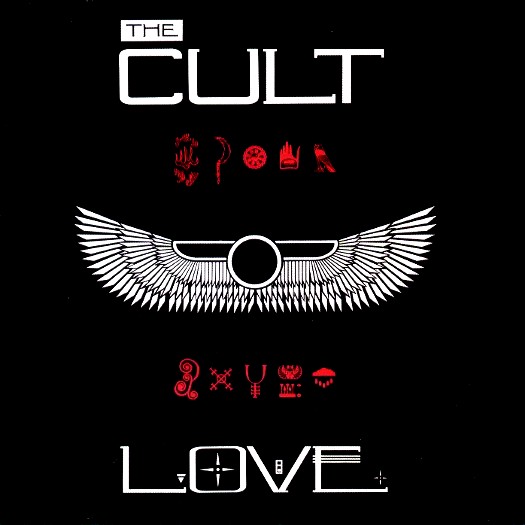
5. The Cult: Love

The Cult began in England in the early 80's as The Southern Death Cult;
a post-punk, goth rock  band with a heavy Native American influence. They then dropped the "Southern", and by 1984 had toned down the gothic connotations of their name by calling themselves, simply, The Cult.

Prior to 1984, The Cult relied upon their goth rock influences (such as Bauhaus and Theatre of Hate) for their sounds. They altered that sound for a very cool album called Dreamtime, and then, in 1985, released the album Love.

Love is the first of many albums from 1985-1986 you'll read about on this blog. Maybe the music was better, maybe not, but my ears were opened for the first time during this period. In 1985 my brother, Jeff, opened a Staten Island nightclub called The Ferry Club, and DJ Mark the Spark played amazing sets of music that blew crowds away. As an eager, yet musically naive teenager...it was "Nirvana".

Songs from Love were played in clubs alongside the synth sounds of the day, yet the Love songs swirled with a 60's psychedelia. There were no keyboards of any kind...and how often did you hear guitar solos in nightclubs? No songs epitomize this time in The Cult's history like "Rain" and "She Sells Sanctuary". There was a sense of pseudo-mysticism about the band...similar to The Doors (in fact, Cult frontman, Ian Astbury, was reportedly offered the role of Jim Morrison in Oliver Stone's 1991 movie The Doors, but turned it down). It really set them apart from bands like The Cure, Depeche Mode, Secession, and Heaven 17. It didn't make them better, just made them stand out. Unfortunately, their sound didn't stand out enough to Americans.

It was the desire to make it big in America that forced the transition into the final career change...hard rock. Over the years, Love has sold well (over two and a half million copies), but, at the time, America wasn't catching on. The Cult felt a change to a harder sound was due. They toured with bands like Guns N' Roses, Aerosmith, and Metallica and produced some more good albums including 1987's Electric and 1989's Sonic Temple (both of which America loved)...but that was it for the sounds of Love.

Sidenote: In May, 1987, The Cult should have been the opening act for Billy Idol at Madison Square Garden, but that show was canceled thanks to an asbestos problem. Billy Idol then went and played The Limelight, while The Cult played an impromptu show at the Ritz. I went with some high school friends and it was one of the best shows I've ever seen. It was their Electric tour, but the set had its share of Love songs as well.

I used to say, "Wanna know how good an album is? Try finding it in a used record store." Well, reissues and remastering have made that test obsolete, but there was a time when you couldn't find a previously owned copy of The Cult's Love...because it was an absolute keeper.  Here's "She Sells Sanctuary" to help you enjoy your day.